Unleashing the Power of Generative AI: Understanding Transformers
Generative Artificial Intelligence (AI) has emerged as a revolutionary force, pushing the boundaries of what machines can achieve in various fields.
Introduction
Generative Artificial Intelligence (AI) has emerged as a revolutionary force, pushing the boundaries of what machines can achieve in various fields. Among the many advancements in Generative AI, the Transformer model has gained immense popularity for its ability to generate human-like text, images, and more. In this article, we’ll delve into the workings of the Transformer model, explore the pivotal phrase “attention is all you need,” and shed light on the diverse techniques of fine-tuning that enable us to harness the true power of generative AI.
The Transformer Model: A Paradigm Shift in Language Processing
The Transformer model represents a paradigm shift in Natural Language Processing, overcoming the limitations of traditional Recurrent Neural Networks (RNNs) and Convolutional Neural Networks (CNNs). Proposed in the landmark 2017 paper “Attention is All You Need” by Vaswani et al, Transformers introduced a novel mechanism for capturing long-range dependencies within sequences without the need for sequential processing.
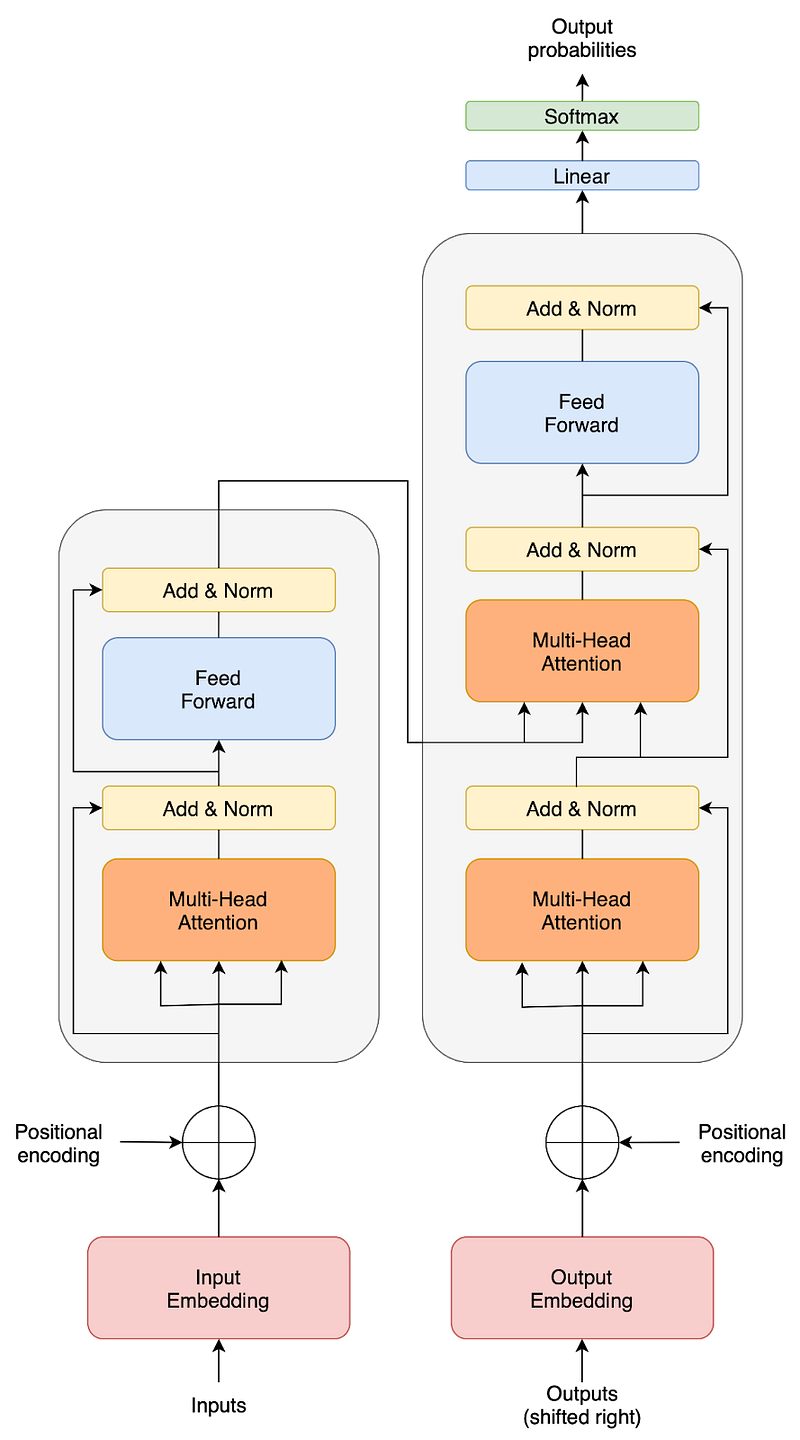
The key innovation lies in the self-attention mechanism. Instead of relying solely on the sequential flow of information, the Transformer allows each word or token in a sequence to attend to all other words simultaneously. This means that every word has access to the entire context of the sentence during processing, making it highly effective in understanding context and generating coherent and contextually relevant responses.
“Attention is All You Need”: The Revolutionary Idea
The phrase “Attention Is All You Need” encapsulates the central concept of the Transformer model. By leveraging self-attention, the Transformer fundamentally alters the manner in which AI models manage sequential data. The attention mechanism assigns weights to each word’s importance concerning the other words in the sequence. Words that are more relevant to the current context are given higher weights, allowing the model to focus on the most important information while processing the sequence.
In the context of language generation, this is immensely powerful. Instead of relying solely on the preceding words in the sequence to predict the next word, the Transformer model considers all words and assigns relevance accordingly. As a result, the model can capture complex relationships, nuances, and dependencies within sentences, leading to more accurate and coherent language generation.
Training and Fine Tuning
Training and fine-tuning are two key processes involved in preparing a transformer model for a specific task or application.
Training a Transformer Model
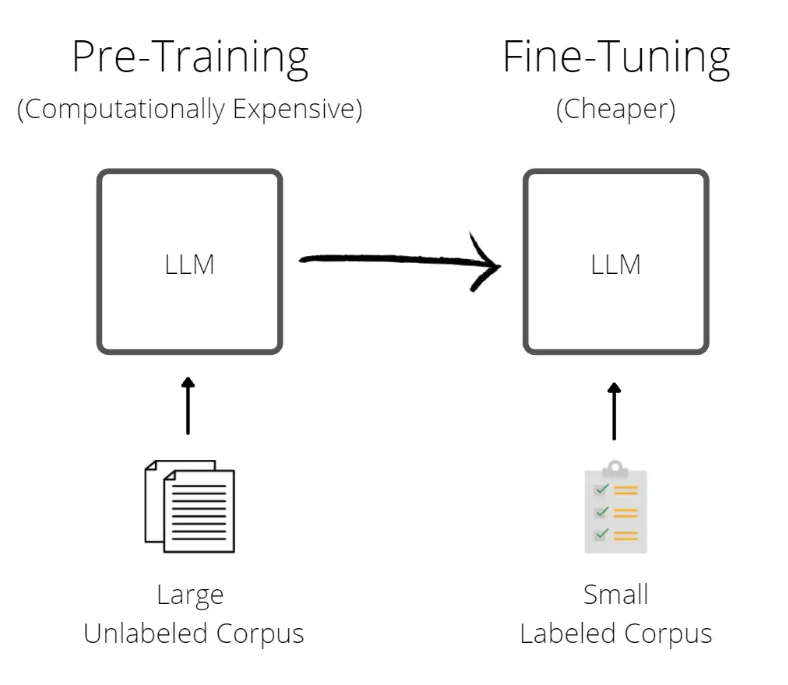
Training a transformer model involves training it from scratch on a large and diverse dataset. During this process, the model learns to understand language patterns, grammar, semantics, and even some level of reasoning from the data it’s exposed to. It involves optimizing the model’s parameters (weights and biases) so that it can generate coherent and contextually relevant text.
For instance, GPT-3 was trained on a massive corpus of text data from the internet, allowing it to learn grammar, facts, and world knowledge. Training involves exposing the model to input sequences and then predicting the next word in a sentence. This process is repeated for countless sentences, enabling the model to learn the underlying patterns and relationships in language.
Fine-Tuning a Transformer Model
Fine-tuning comes after the initial training and involves adapting a pre-trained model to perform a specific task or cater to a particular domain. Instead of training the model from scratch, which would require a vast amount of task-specific data, fine-tuning utilizes a smaller dataset specific to the desired task.
In the fine-tuning process, the pre-trained model’s parameters are adjusted slightly based on the task-specific data. This helps the model leverage its general language understanding while tailoring it to the nuances of the task.
Zero-shot learning, one-shot learning and few-shot learning are all techniques that allow a machine learning model to make predictions for new classes with limited labeled data.
- Zero-Shot Learning: In zero-shot learning, a model is tested on tasks it has never seen during training.
- One-Shot Learning: One-shot learning involves training a model with only one example per class or task.
- Few-Shot Learning: Few-shot learning is a broader concept where a model is trained with a small number of examples per class or task.
Additional techniques related to these concepts include:
- Meta-Learning (Learning to Learn): Meta-learning involves training a model to learn the learning process itself.
- Transfer Learning: Transfer learning involves training a model on a source task and then using the knowledge gained from that task to improve performance on a target task.
- Data Augmentation: Data augmentation involves artificially increasing the size of the training dataset by applying various transformations to the existing data.
- Prompt Engineering: In language tasks, creating well-crafted prompts or input formats can guide the model’s behavior.
- Adaptive Learning Rates: When training on small datasets, using adaptive learning rate techniques can help prevent overfitting.
- Regularization Techniques: Techniques like dropout, weight decay, and layer normalization can help mitigate overfitting when training on small amounts of data.
These techniques are important for overcoming the challenges posed by limited data, enabling models like LLMs to perform well in various scenarios with only a small amount of information available for training.
Effective Use Cases for Transformer Models
Transformers and Generative AI have shown significant power and versatility across a wide range of use cases due to their ability to process and generate text, which includes understanding context, capturing patterns, and producing coherent responses. Some prominent use cases include:
- Natural Language Understanding (NLU): Transformers excel at tasks like sentiment analysis, named entity recognition, intent recognition, and text classification.
- Text Generation: This is one of the most prominent use cases. It’s used for content creation, creative writing, and more.
- Chatbots and Virtual Assistants: Transformers have revolutionized the field of chatbots.
- Summarization: Transformers can generate concise and coherent summaries of long pieces of text.
- Question Answering: Models like BERT and T5 can read a given passage and answer questions about the content with remarkable accuracy.
- Image Captioning: Transformers can also be used in conjunction with computer vision models to generate descriptive captions for images.
- Text Completion: Transformers can suggest auto-completions for sentences.
- Language Translation and Multilingual Applications: Transformers are adept at translating text between different languages.
- Code Generation: Transformers can assist in generating code snippets. There are relevant Open Source pretrained models available on Hugging Face like WizardCoder for this purpose.
These are just a few examples, and the potential applications of transformers and generative AI continue to expand as researchers and developers explore new ways to harness their capabilities.
Conclusion
Generative AI, powered by the Transformer model, has ushered in a new era of natural language processing and creativity. With the revolutionary concept of “attention is all you need,” the Transformer model enables machines to understand context and generate human-like text with unprecedented accuracy and coherence. Through fine-tuning, developers can unleash the true potential of the Transformer model, adapting it to a myriad of specific tasks and applications, making it a driving force in shaping the future of AI-powered creativity and language processing.